Focal Vibration
Professional solutions to stimulate the neuromuscular system, support motor control, and integrate advanced functional recovery protocols.
Focal vibration is a technology used in physiotherapy, rehabilitation, sports medicine, and functional recovery to apply controlled mechanical stimuli to specific muscular or tendinous areas.
Unlike global vibrations, focal vibration acts in a localized manner, allowing the professional to direct the stimulus to specific districts and integrate it into therapeutic pathways based on clinical assessment.
Synergy Med offers professional solutions for physiotherapy centres, outpatient clinics, clinics, rehabilitation facilities, and sports organisations that want to incorporate advanced and differentiating technology into their physical medicine offerings.
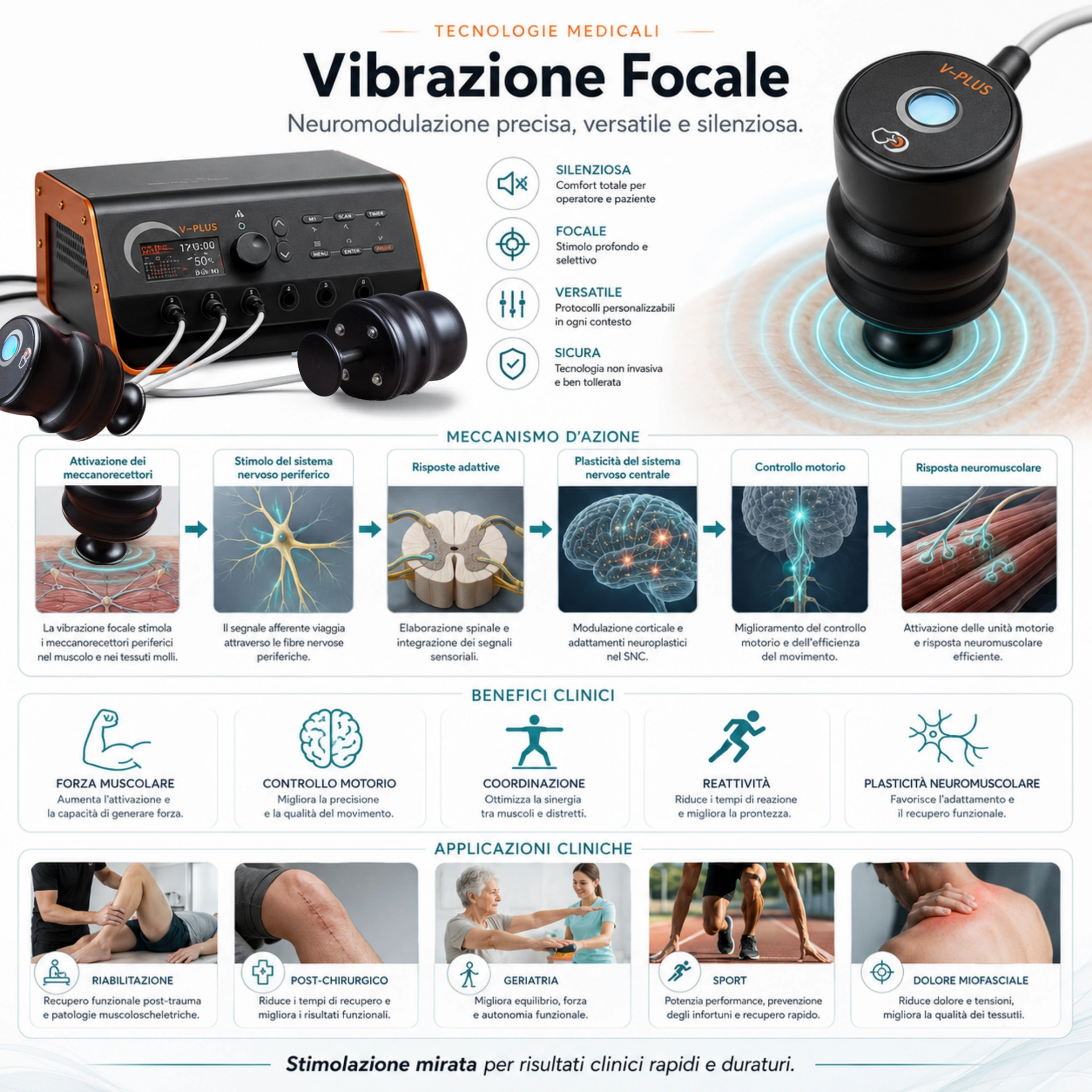
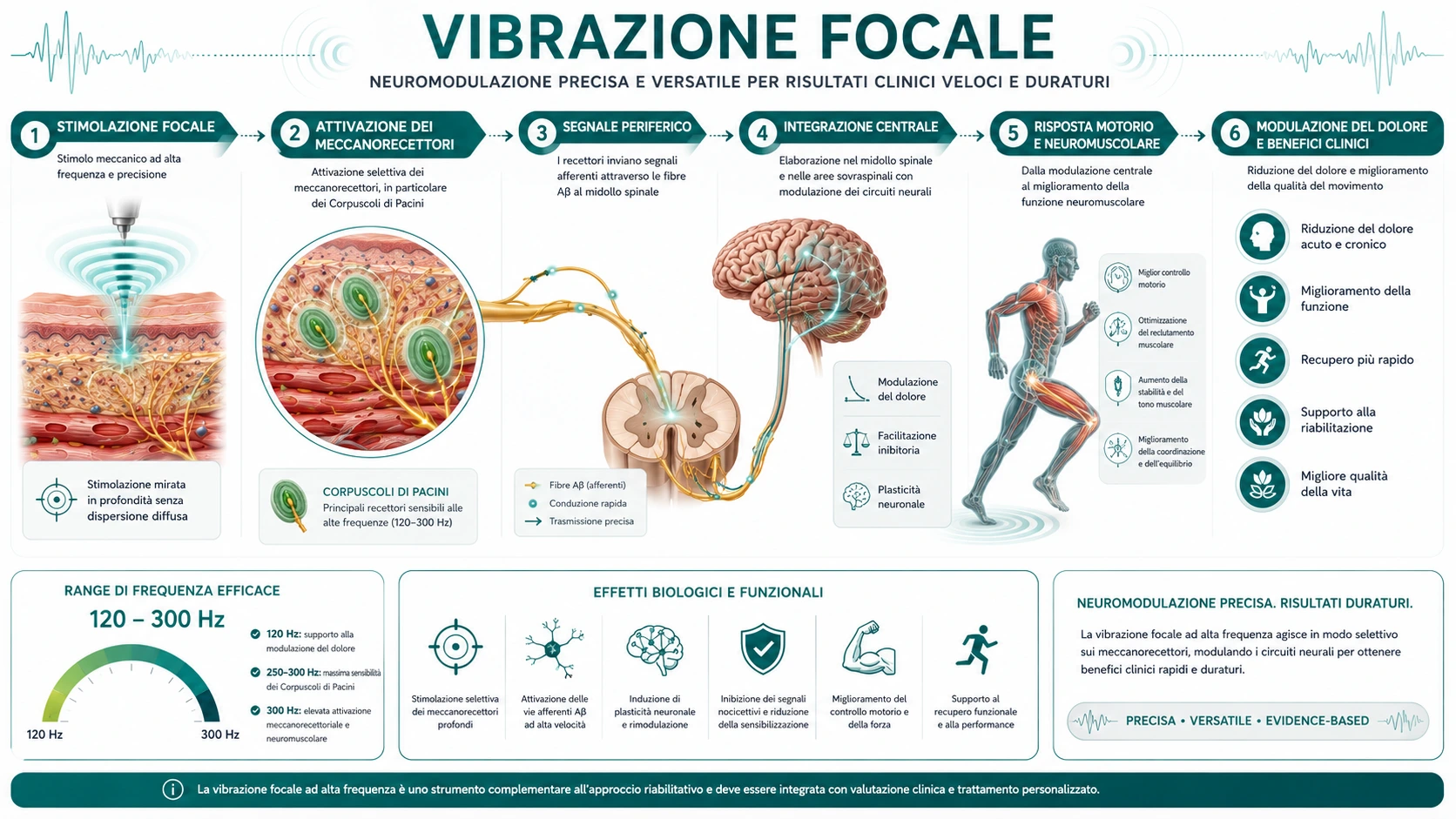
From peripheral stimulation to the neuromuscular response
Focal vibration acts through a rapid and controlled mechanical stimulus applied to a specific area. This stimulus is perceived by the sensory receptors present in the tissues, particularly mechanoreceptors and muscle-tendon receptors.
The information generated reaches the nervous system through afferent pathways and can contribute to the modulation of the motor response, muscle tone, and neuromuscular control.
1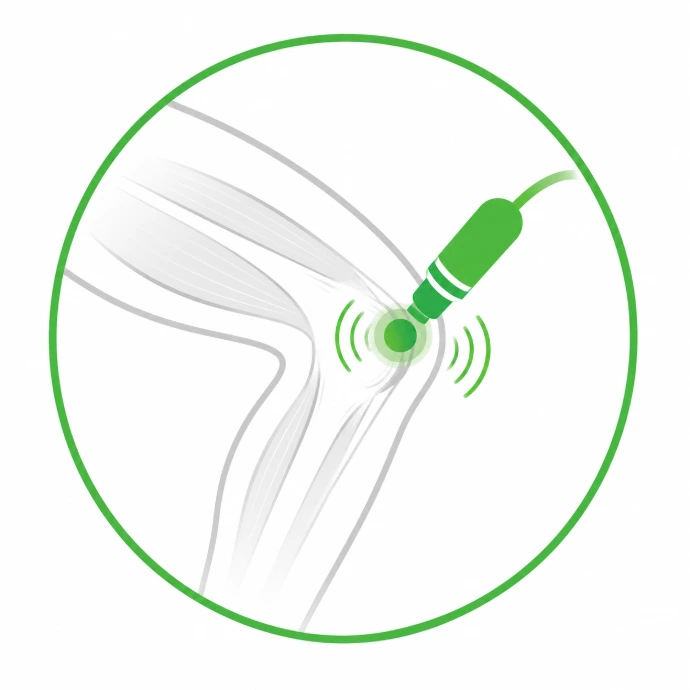
Localized application
The vibratory stimulus is applied to a muscle, a tendon, or a specific functional district.
Localized application
The vibratory stimulus is applied to a muscle, a tendon, or a specific functional district.
2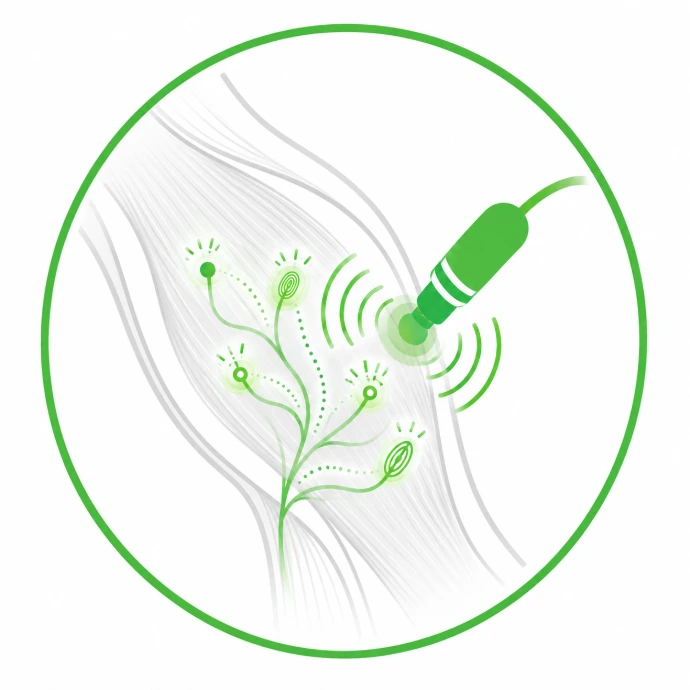
Activation of the receptors
Vibration stimulates sensory receptors involved in the perception of movement, tension, and position.
Activation of the receptors
Vibration stimulates sensory receptors involved in the perception of movement, tension, and position.
3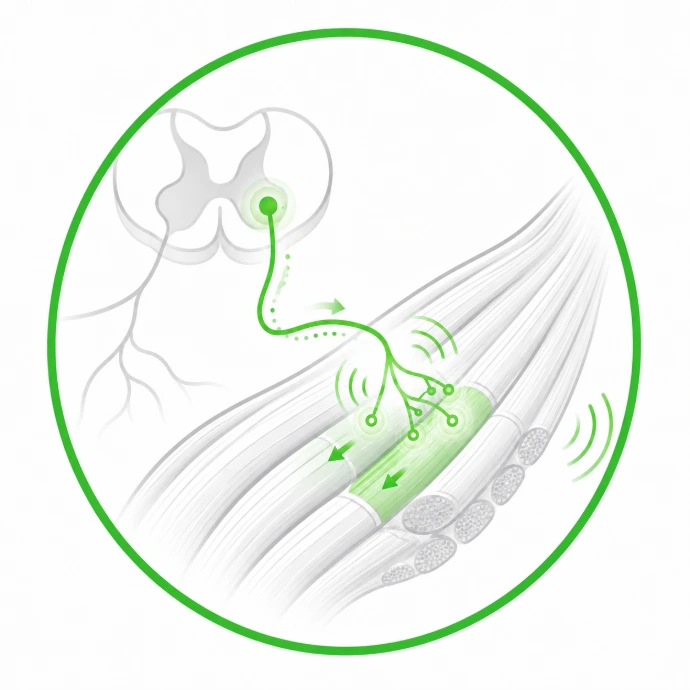
Neuromuscular response
The nervous system receives peripheral information and can modulate tone, recruitment, and motor control.
Neuromuscular response
The nervous system receives peripheral information and can modulate tone, recruitment, and motor control.
4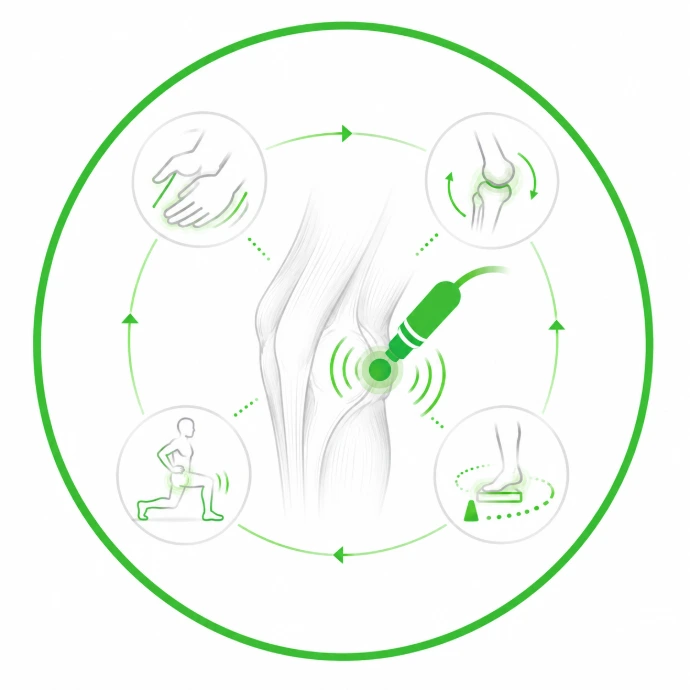
Therapeutic integration
The professional integrates focal vibration into the rehabilitation process along with manual therapy, exercise, mobilization, and functional training.
Therapeutic integration
The professional integrates focal vibration into the rehabilitation process along with manual therapy, exercise, mobilization, and functional training.
5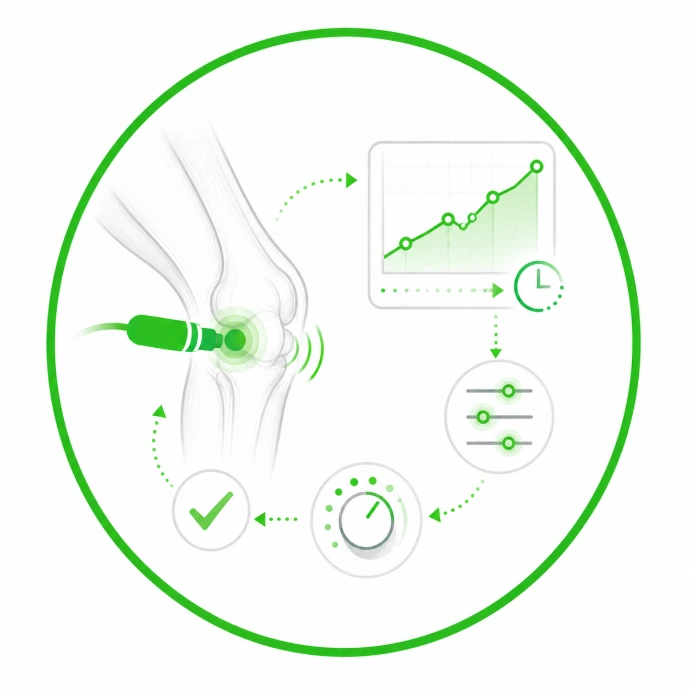
Monitoring of results
The patient's response is evaluated over time to adapt protocols, frequencies, and operational methods.
Monitoring of results
The patient's response is evaluated over time to adapt protocols, frequencies, and operational methods.
From functional rehabilitation to sports performance
Focal vibration can be incorporated into various therapeutic and functional pathways. Its use must always be assessed by the professional based on the patient's condition, treatment goals, and the indications of the device used.
The Wintecare catalogue indicates fields of application related to geriatrics, rehabilitation, neurology, pain, sports medicine, and sports performance; other clinical sources describe applications in orthopaedics and rehabilitation for contractures, hypertonia, hypotonia, motor control anomalies, and tendinopathies.
Support in pathways dedicated to muscle, joint, tendon, and functional pain, according to clinical assessment.
Technology that can be integrated into movement re-education, coordination, and muscle recruitment programmes.
Possible support in pathways dedicated to tone and muscle activation, based on the professional's protocol.
Usable in targeted pathways for managing rigidity, tension, and tone alterations, always according to professional guidance.
Integration into protocols after trauma, sports injuries, sprains, or functional issues.
Support for the professional in pathways dedicated to tendons, insertions, and overuse conditions.
Possible use in specialist neuro-rehabilitation programmes, motor control, and spasticity management, with appropriate protocols and qualified personnel.
Technology useful in sports contexts for recovery, prevention, neuromuscular activation, and performance support.
How to choose a focal vibration technology?
Not all vibration technologies are the same. To choose the most suitable device, it is important to evaluate the precision of the stimulus, available frequencies, application methods, delivered force, ergonomics, noise level, protocols, accessories, and ease of integration into daily practice.
Frequency and
intensity
Fundamental parameters to guide the stimulus and adapt it to the type of treatment.
Application precision
Ability to work on specific areas in a controlled and repeatable manner.
Delivery mode
Manual systems, transducers, applicators or devices dedicated to mono or multi-regional treatments.
Localized and controlled mechanical stimulation
Focal vibration is a form of mechanical stimulation applied locally, generally on muscles, tendons or specific functional areas. It differs from Whole Body Vibration because it does not involve the entire body, but works on selected regions.
This feature allows the professional to use the technology in a targeted manner, adapting the application point, frequency, intensity and duration of the treatment based on the therapeutic goal.
The technical literature describes focal mechanical vibration as a modality capable of interacting with muscle-tendon receptors and proprioceptive afferents; in particular, the amplitude and frequency of the stimulus are considered fundamental parameters for guiding the neurophysiological response.
Do you want to integrate focal vibration into your centre?
Synergy Med helps you choose the most suitable focal vibration solution for your activity and to incorporate it into your physical medicine, physiotherapy, rehabilitation and sports performance pathways.
We analyse the needs of your facility, the target patients and the growth objectives to build a concrete, professional and sustainable proposal.
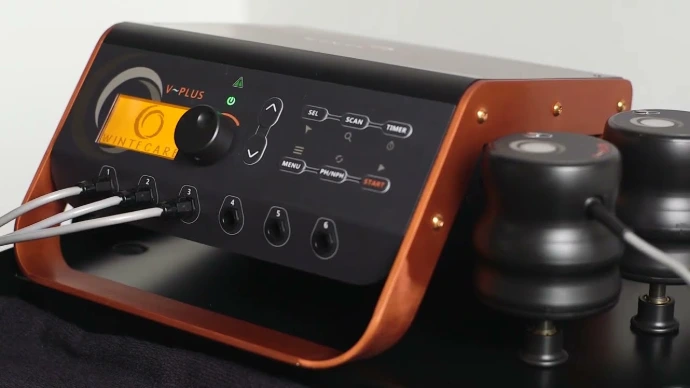

T-PLUS
V~PLUS is the device that redefines focal vibration, combining precision, power and versatility to deliver fast and lasting clinical results. Designed to activate specific mechanoreceptors, V~PLUS stimulates the peripheral nervous system, generating adaptive responses able to influence the plasticity of the central nervous system, improve motor control and optimise the neuromuscular response from the very first session.